ENGINEERING MIND. CREATIVE INSTINCT.

ALEEF
SAHIRSHA.

I connect clear thinking
with a creative point of view.

Explore my work
MECHATRONIC ENGINEERING · APUKUALA LUMPUR, MY
ROBOTICSPRODUCT DESIGNVISUAL THINKING

01 / SELECTED WORK

Ideas, made tangible.

A few things I’ve been building,
questioning and figuring out.

AUTONOMOUS NAVIGATION / 360°
SCUTTLE / ROS 2

01 / ROBOTICS & AUTONOMY

A robot with somewhere to go.

Indoor navigation. Human spaces. Considered engineering.
FINAL-YEAR PROJECTROS 2 · NAV2 · SENSOR FUSION
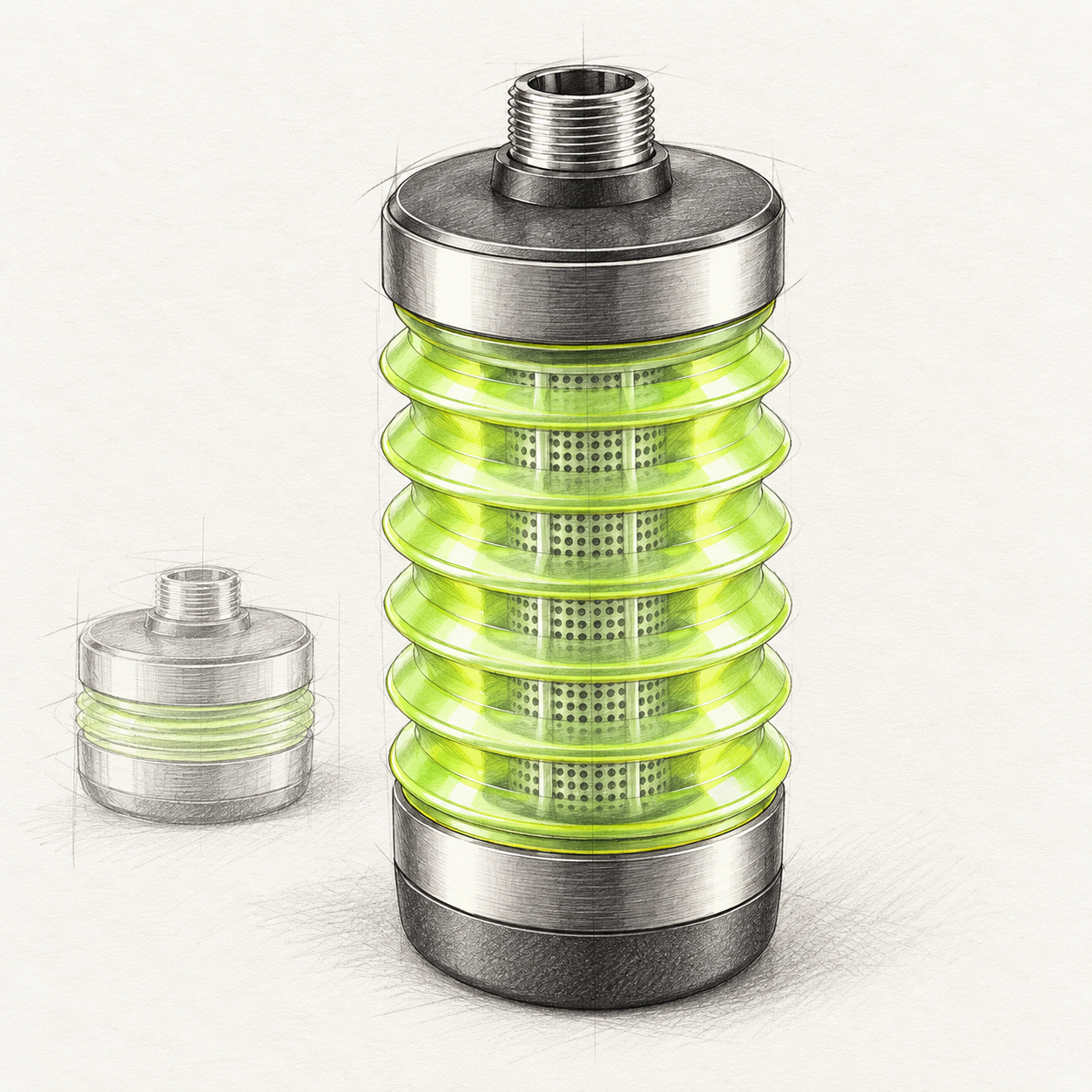
Hand-drawn style AQUAFLOW concept sketch with a lime accordion body and visible filter cartridgeCONCEPT SKETCH

02 / PRODUCT DESIGN

AQUAFLOW.

More thought. Less space.

CONCEPT PROPOSALDESIGN FOR MAINTENANCE

04 / GROUP DESIGN PROJECT

CARBONIQ.

Four sensing inputs.
One connected system.

Air quality, water quality and water level, with a derived carbon indicator.
My focus: system hardware and water-level monitoring.

Also behind the visuals.IASS · Head of Media

02 / A LITTLE ABOUT ME

Part engineer.
Part visual thinker.
Always curious.

I’m Aleef, a mechatronic engineering student at APU. I pair analytical thinking with a strong visual instinct, and I enjoy giving an idea a personality of its own.

Maths draws me to patterns and logic. Design, presentations and my Head of Media role in IASS let me turn that thinking into something clear, memorable and distinctly mine.

LinkedIn ↗
APU–DMU DUAL DEGREETP071840

03 / SWOT & PROGRAMME OUTCOMES

Who I am. How I grow.

SWOT / MY PERSONAL PERSPECTIVE

Know where to grow.

01
HELPFULCHALLENGINGINTERNALEXTERNAL

Personality, habits and ambitions · Select a quadrant to explore.

PO / RECORDED ATTAINMENT

Twelve outcomes. One focus.

02
0.250.500.751.00PO1PO2PO3PO4PO5PO6PO7PO8PO9PO10PO11PO12
PO8 / MY NEXT FOCUS

Safety & professional practice

0.67

Scale 0–1 · 11 outcomes at 1.00 · Select a point for its reflection.

04 / THE LEARNING JOURNAL

The person behind the work.

What I’ve learned.
Where I go next.

RECOGNITION & CONTINUOUS LEARNING

Milestones that matter.

A record-breaking community moment.
And a habit of learning.

Also learning through LinkedIn and Forage.

MY ACADEMIC FOUNDATION

Engineering, with perspective.

BEng (Hons) Mechatronic Engineering
APU–DMU dual-degree programme

ALWAYS BUILDING. ALWAYS LEARNING.

Let’s make
something matter.

Résumé

RÉSUMÉ / ALEEF SAHIRSHA

Engineering.
With a creative edge.

Mechatronic Engineering undergraduate with hands-on academic experience in automation, control systems, signal processing and intelligent robotics.

aleefsahir@gmail.com+60 10 666 0830Sungai Besi, Seri Kembangan
Selangor, Malaysia

Experience

Engineering Project Student

JAN 2025 — PRESENT

Asia Pacific University · Kuala Lumpur · Academic project experience

  • Designed and simulated electro-mechanical systems combining pneumatics, electronics and automation.
  • Delivered academic mini-projects using MATLAB, Simulink and Python.
  • Collaborated with multidisciplinary peers on vision-based disease-detection systems using image processing and machine learning.
  • Practised circuit analysis in LTSpice and simulation for control and automation.

Autonomous Navigation & Obstacle Avoidance

FINAL-YEAR PROJECT

Developed a SCUTTLE-based indoor navigation prototype using ROS 2 Humble, LiDAR, wheel odometry and IMU fusion. Work includes an APU Level 4 map, a destination-selection GUI and separate recorded-data reconstruction studies.

Education

BEng (Hons) Mechatronic Engineering

OCT 2022 — PRESENT

Asia Pacific University of Technology & Innovation
APU–De Montfort University dual-degree programme

Kuala Lumpur, Malaysia · Expected graduation: 2026, as listed in my résumé.

AISSCE · CBSE Grade 12

MAR 2021 — JUN 2022

International Indian School Jeddah · Science stream

89.6%

AISSE · CBSE Grade 10

MAR 2019 — JUN 2020

International Indian School Jeddah

85.3%

Skills & tools

Robotics & systems

ROS 2Nav2CartographerAMCLSensor fusionPython

Modelling & analysis

MATLABSimulinkLTSpiceControl systemsCircuit analysisMicrosoft 365

Working with people

Iterative problem-solving, visual communication, presentations, multidisciplinary collaboration, media coordination and project planning.

Certifications
& learning

Rocheston Certified Cybersecurity Engineer

RCCE · Level 1, as listed in my résumé

ISSUED 18 DEC 2024 · EXPIRES 18 DEC 2026

MATLAB & Simulink Onramp

MathWorks

JAN 2024

Additional professional learning

Time Management · LinkedIn
Audit and Digital Assurance · Forage
CIMA Industry Talk · November 2023

Recognition

Guinness World Records event participant

Largest picture mosaic formed by people · 4,500 participants
Abeer Medical Group · Jeddah, Saudi Arabia

14 November 2017 · Certificate of participation

Leadership
& membership

Head of Media · IASS Committee

MAR 2025 — PRESENT, AS LISTED IN RÉSUMÉ

Media leadership and visual communication within the committee.

Student Member · The Institution of Engineers, Malaysia

MAR 2025 — PRESENT

Head Volunteer · International Indian School Jeddah

MAR 2020 — JUN 2022

Event Assistant · ICDSBE

NOV 2023
Project 01 / Autonomous navigation

01 / AUTONOMOUS NAVIGATION BOT

A robot with
somewhere to go.

Development of an autonomous navigation and obstacle-avoidance system for indoor navigation in hospitals and clinics.

Final-year projectROS 2 HumbleSCUTTLEUniversity prototype
My robot’s 24-second 3D model rotation · Hologram visualisation.

The problem

Indoor delivery requires more than following a route. A robot must estimate its position, respond to obstacles and allow an operator to understand or interrupt its behaviour. My project explores this challenge with healthcare indoor logistics as the intended application.

My contribution

I worked on the integration of sensing, mapping, localisation, navigation and an operator GUI. The project also includes separate VGGT-SLAM and Khronos research workflows for exploring richer spatial representations.

From sensing to movement.

01 / SENSERPLIDAR C1
Wheel odometry + IMU
02 / LOCATEEKF + AMCL
Saved Cartographer map
03 / PLAN & ACTNav2 navigation
Operator GUI

The SCUTTLE platform uses a Raspberry Pi 5 for the navigation workflow. Live navigation and recorded-data 3D/4D reconstruction are separate parts of the project.

AVAILABLE PROJECT OUTPUTS

A saved map. An operator interface. A testable system.

The APU Level 4 occupancy map was saved on 1 September 2026 at 2622 × 2117 pixels, with a resolution of 0.05 m/pixel. The GUI supports destination selection and navigation control. Map resolution describes the grid; it is not a measurement of localisation accuracy.

The decisions that taught me most.

Diagnose before redesigning

Odometry drift and sensor-frame alignment made consistency difficult. I worked with wheel/IMU fusion, sensor transforms and configuration checks. This taught me to examine units, timing and coordinate frames before treating every error as a navigation-planner problem.

Respect the compute budget

Reconstruction placed heavier demands on memory and rendering. I used university GPU workstations and processed recorded data separately from robot control. Splitting and aligning map sections helped the workflow, but visual continuity alone cannot establish metric accuracy.

Validation is the next standard.

The evaluation plan includes a goal-error target of ≤0.30 m and a human-clearance target of ≥1 m, alongside navigation success, interventions and collisions. These are targets, not reported achievements. The project has university development evidence; it has not been validated for clinical deployment.

Evidence to add

Add dated route-trial logs, GUI screen captures, configuration versions and measurements of goal error and obstacle clearance. Link each result to the exact run and retain unsuccessful attempts.

THE PERSON BEHIND THE PROJECT

From the screen.
To the real world.

Me alongside the navigation robot and project display at APU—a personal part of the engineering journey behind these maps, models and ideas.

ALEEF SAHIRSHA / TP071840

Aleef Sahirsha with the navigation robot, project display and two other people at APU
With my autonomous navigation robot at APU.
Project 02 / AQUAFLOW

02 / PRODUCT CREATION TECHNOLOGY

AQUAFLOW.
More thought.
Less space.

A smart collapsible tap-water filter concept, designed around storage, servicing and everyday use.

Pencil-and-ink AQUAFLOW concept illustration with lime highlights and a small collapsed-form study
Hand-drawn style concept illustration. The accordion body, tap adapter and cartridge explore the product’s form; geometry and performance remain subject to development.

The design idea

A flexible accordion body reduces the stored form, while a twist-lock cartridge allows the housing to be kept during servicing. The concept includes a tap adapter, an LED maintenance reminder, an optional app and a travel bag for the unit and spares.

Why these choices matter

The flexible body was selected over a telescopic mechanism to avoid extra sliding parts. A reminder on the product keeps essential feedback visible without requiring a phone. The design aims to make maintenance understandable as well as physically easier.

The trade-offs

A folding body introduces questions about cleaning, seal life and fatigue. Extra electronics add maintenance and end-of-life considerations. A lower replacement cost is only persuasive when materials, cartridge life and supplier quotations are verified.

My next iteration

I would test tap fit, leaks, folding durability and user handling, then assess filtration with an appropriate test method. Symbols and text should support LED colours. A filter-life estimate must not be presented as a measurement of drinking-water safety.

CONCEPT STATUS

AQUAFLOW is a design proposal. Portability, filtration performance, cost savings and environmental benefits have not been verified through a finished prototype.

Evidence to add

Add original sketches, concept-selection criteria, material choices, supplier quotations and a dated prototype-validation plan.

Project 04 / CARBONIQ environmental monitoring

04 / GROUP DESIGN PROJECT · APU

CARBONIQ.
Make the invisible visible.

Our ESP32-based prototype brings air quality, water quality and water level into one live monitoring system, with local alerts and Python-based risk interpretation.

ESP32 / IoTHardware integrationWater-level sensingTeam project
MQ2 air, pH, turbidity and ultrasonic sensors feed an ESP32. Local indicators show status; Wi-Fi carries data to a browser dashboard and Python risk analysis.
System overview redrawn from our CARBONIQ project paper. Select the diagram to view it at full size.

Why we built it

Environmental readings are easier to act on when they can be seen together. We combined four sensing inputs with SAFE, WARNING and DANGER states, so changing conditions could be understood both at the device and through a browser.

From readings to guidance

The ESP32 calibrates and filters sensor data, drives an LCD, LEDs and buzzer, and serves live readings over Wi-Fi. Python analytics combines the readings into a risk score, identifies the dominant cause and generates recommendations.

MY CONTRIBUTION / HARDWARE & WATER LEVEL

Making the physical
system work together.

Hardware integration

My responsibility was full-system hardware: bringing the sensing modules, controller, connections and local feedback into one physical assembly, alongside teammates responsible for software and the air- and water-quality subsystems.

Water-level monitoring

I focused on the HC-SR04 ultrasonic subsystem, using the distance to the water surface for level monitoring and integrating that reading into the wider system. The project paper reports an approximate measurement error of 4.38% for this subsystem.

VALIDATION / REPORTED IN OUR PROJECT PAPER

Tested through changing conditions.

6 / 6Reported validation cases passed
3 statesSAFE · WARNING · DANGER

Tests covered tap water, acidic and alkaline disturbances, muddy and lightly cloudy water, and repeated switching between safe and unsafe conditions. Local alerts and dashboard status followed the expected classifications.

Carbon indicator & prototype limits

The carbon score is a relative indicator derived from gas-sensor behaviour, rather than a direct CO₂ or emissions measurement. MQ2 cross-sensitivity, sensor drift and Wi-Fi availability remain limitations. More selective sensors and longer-term calibration would strengthen the next version.

What I take forward

This project strengthened my ability to connect individual modules into a working system. It taught me to coordinate interfaces with teammates, test behaviour under changing conditions and communicate clearly what a prototype can—and cannot—tell us.

Project 03 / 3D & 4D map galleries

03 / SPATIAL EXPLORATION

One floor.
More dimensions.

My APU Level 4 reconstructions, from the full layout to the details inside it. VGGT-SLAM explores 3D appearance and geometry; Khronos adds a workflow for spatial and temporal representation.

What I learned

Reconstruction taught me to work in recoverable stages: capture, process, inspect, align and revisit. The full view helps me judge continuity; close views help me notice missing surfaces and local inconsistencies.

How it connects to navigation

The 2D map supports localisation and planning. The 3D and 4D workflows explore richer representations of the same environment. I keep those purposes separate when comparing detail, processing demand and usefulness.

Journal 01 / The way I think

SELF-INTRODUCTION / THE WAY I THINK

A mind for logic.
An eye for possibility.

I’m Aleef Sahirsha, a mechatronic engineering student on the APU–DMU dual-degree programme. I enjoy the meeting point between clear reasoning, visual expression and ideas that feel a little unexpected.

Maths is a natural strength for me: I enjoy patterns, relationships and understanding how things fit together. My creative side is just as important. I care about the shape of an idea, how it is presented and whether someone else can connect with it. That combination influences how I approach engineering, design and communication.

What catches my attention

A clever mechanism, a clean visual or a well-told idea can all spark my curiosity. I like asking how something works and then imagining how it could be clearer, more useful or more memorable.

How I show up

I am ambitious and enjoy a challenge. I like taking initiative, bringing ideas into a discussion and helping work move forward. Through my Head of Media role in IASS, I have a place to develop that energy alongside communication and teamwork.

How I want to improve

I want to balance high standards with steady progress. That means finishing deliberately, making time for the parts I enjoy less and listening before deciding. Being open to feedback is part of making my ideas stronger.

What matters to me

Originality, clarity and doing work I can stand behind. I want to credit the people I work with, explain my own contribution honestly and consider how decisions affect others. Creativity matters most to me when it is thoughtful as well as expressive.

The direction I’m drawn to.

Robotics, automation and product design give me room to use both sides of my thinking. I want to keep developing as someone who can understand a complex idea, give it a clear form and work with others to make it useful.

Journal 02 / Personal SWOT

PERSONAL SWOT / A CLEARER PICTURE OF ME

Creative instinct.
Honest perspective.

I see myself as creative, analytical and ambitious. This is a reflection on how I think, the habits I want to strengthen and the possibilities around me.

S

INTERNAL / BUILD ON

Strengths

A creative eye

I enjoy shaping how an idea looks, feels and communicates. My interest in visual design, presentation and media helps me notice layout, detail and the story behind a piece of work.

Analytical thinking

Mathematics is one of my strengths. I like recognising patterns, breaking a problem into manageable parts and understanding why an answer makes sense. That gives structure to my creative ideas.

Initiative and communication

I am drawn to taking an active role and helping ideas move forward. Being Head of Media in IASS gives me a setting to combine visual judgement, communication and coordination with others.

Ambition and persistence

I set high standards and enjoy challenging myself. I am willing to revisit an idea and learn what is missing. My next step is to make that drive work with clear priorities and a realistic finish line.

W

INTERNAL / IMPROVE

Weaknesses

Knowing when to stop refining

I can spend too long improving the look or detail of something. That attention matters, but it needs a limit. I want to define what “finished” means early and give each round of refinement a time budget.

Consistency in less-preferred tasks

I am more naturally drawn to maths and visual design than to coding. I need to give less-preferred tasks steady attention too: short practice sessions, small goals and time to understand what I am using.

Protecting my focus

Engineering, media responsibilities and creative interests can pull my attention in different directions. I need to choose a few priorities, break larger tasks into steps and share responsibilities early when working with a team.

O

EXTERNAL / EXPLORE

Opportunities

A community to learn with

APU and IASS give me access to peers, lecturers and professional conversations. I can use these connections to ask for honest feedback, find mentors and collaborate with people whose strengths differ from mine.

A place for both sides of my thinking

Robotics, automation, product design and visual communication offer directions I want to explore. I am especially interested in work where technical reasoning and thoughtful design can contribute to the same outcome.

Further study and wider exposure

Postgraduate study, industry experience and collaboration beyond my usual circle could deepen my interests in design, robotics and intelligent systems. My next step is to compare pathways against the work I actually enjoy doing.

T

EXTERNAL / MANAGE

Threats

Overlapping deadlines

Academic submissions and media commitments can become demanding at the same time. I can reduce the pressure by planning backwards from deadlines, protecting focused work time and leaving a buffer for revisions.

Changing tools and expectations

New technical and creative tools can create pressure to keep learning everything at once. I need to strengthen the fundamentals, choose tools for a clear purpose and avoid letting novelty set my priorities.

Competitive next steps

Applications for further study and early-career opportunities require a clear account of what I can contribute. I want to communicate my mix of analytical and creative strengths through specific examples, honest reflection and a focused direction.

WHAT I WANT TO DO WITH THIS

Keep the imagination.
Build the discipline.

I want to use my analytical strengths to organise my ideas, my creativity to communicate them and my initiative to seek feedback. Clear priorities, consistent practice and room for other people’s perspectives will help me turn ambition into dependable progress.

Journal 03 / Programme Outcomes

PO ATTAINMENT / TP071840

Beyond the score.

My report card records 1.00 for eleven outcomes and 0.67 for PO8. These values are a starting point for reflection, not a substitute for evidence.

11/12

outcomes recorded at 1.00

0.67

PO8 · safety & professional practice

MY PRIORITY / PO8

Make professional responsibility visible.

The supplied official descriptor places safety, health, social, cultural and legal responsibilities under PO8. Teamwork is PO10. I will use the lower PO8 value to guide a focused review with my lecturer, then document how risks, user needs and permissions affect my project decisions. The numerical score alone cannot explain the original assessment gap.

Values transcribed only from ALEEF SAHIRSHA’s report-card row. Outcome descriptions below are concise paraphrases of the supplied official PLO definitions; numbering is unchanged.

PO01Engineering principles1.00

Apply mathematics, science and engineering principles to solutions for complex engineering problems.

Connection to my work

The AMR integrates motion estimates, sensor measurements and coordinate frames. My MATLAB/Simulink work also connects mathematical models with system behaviour.

My judgement & next step

A working system is not enough to demonstrate the reasoning. I should explain units, frame conventions, model assumptions and sources of uncertainty.

Evidence to add

Annotated kinematic model, calculations and a configuration-linked measurement example.

PO02Problem analysis1.00

Analyse complex engineering problems and apply engineering principles to solve them.

Connection to my work

Odometry drift and transform alignment made navigation consistency a diagnostic problem rather than simply a coding task.

My judgement & next step

I need to distinguish symptoms from causes. A controlled comparison with one change at a time is stronger evidence than several simultaneous adjustments.

Evidence to add

A fault log showing the symptom, competing explanations, controlled change and observed result.

PO03Tools & techniques1.00

Select and use suitable tools and techniques for complex engineering problems.

Connection to my work

ROS 2, Cartographer, AMCL and Nav2 serve the navigation workflow; VGGT-SLAM and Khronos serve separate reconstruction questions. MATLAB, Simulink and LTSpice support modelling and analysis.

My judgement & next step

Selecting a powerful tool is not the same as selecting an appropriate one. I should justify each choice using data requirements, compute limits and the engineering task.

Evidence to add

A tool-selection comparison and the versions/configurations used for a reproducible run.

PO04Research & investigation1.00

Investigate complex engineering problems using research techniques.

Connection to my work

Comparing mapping outputs and investigating inconsistent behaviour provides a basis for structured experiments.

My judgement & next step

My evidence needs a repeatable protocol with dated observations, unsuccessful trials and an explicit measurement method. Targets must stay separate from results.

Evidence to add

A test protocol, raw route trials, uncertainty notes and a conclusion linked to the data.

PO05Innovative design1.00

Design innovative solutions for complex engineering problems.

Connection to my work

The navigation prototype combines sensing, localisation, planning and an operator interface. AQUAFLOW explores an accordion body, serviceable cartridge and maintenance feedback.

My judgement & next step

Innovation should be judged against requirements and alternatives. Added features may introduce cleaning, durability, complexity or accessibility costs.

Evidence to add

Requirements, concept-selection criteria, iteration sketches and a trade-off justification.

PO06Professional communication1.00

Communicate effectively and professionally on complex engineering activities.

Connection to my work

The robot GUI, viva presentation, product-design explanation and media work give me several ways to communicate a technical idea.

My judgement & next step

A polished visual can still be misunderstood. I should use plain language, explain evidence limits and check understanding with people of different technical familiarity.

Evidence to add

An original and revised explanation, audience feedback and a note describing what changed.

PO07Sustainability & environment1.00

Demonstrate good engineering practice in sustainable development and environmental considerations.

Connection to my work

The modular robot and AQUAFLOW’s reusable housing create opportunities for repair and reduced replacement of whole assemblies.

My judgement & next step

These are design intentions, not measured environmental benefits. Material choices, energy use, cartridge disposal and electronics at end of life must enter the comparison.

Evidence to add

A whole-life comparison with stated boundaries, energy/material assumptions and an end-of-life plan.

PO08Safety & professional practice0.67

Engage in professional engineering practice addressing safety, health, social, cultural and legal responsibilities.

Connection to my work

The hospital-oriented robot makes shared-space safety, operator control and permission to test directly relevant. AQUAFLOW adds water-contact and user-handling questions.

My judgement & next step

My 0.67 result makes this my priority. It does not identify the reason for the gap. I will review assessment feedback and document hazards, affected users, permissions and applicable requirements before claiming readiness.

Evidence to add

A reviewed risk register, stop/recovery checks, an inclusive-use review and records of permission and data handling.

PO09Professional ethics1.00

Execute the responsibilities of an engineer professionally and ethically.

Connection to my work

I distinguish model visualisation from physical trials, university development from clinical validation, and performance targets from measured outcomes.

My judgement & next step

Ethical reporting also means retaining failures, crediting collaborators and open-source work, and protecting identifiable scene data. These habits need a traceable record.

Evidence to add

A claim-to-evidence register, attribution list, retained trial failures and data-handling decisions.

PO10Multidisciplinary teamwork1.00

Function effectively as a team leader or member in multidisciplinary settings.

Connection to my work

Multidisciplinary academic projects, IASS media leadership and my earlier Head Volunteer role provide settings for coordination and shared responsibility.

My judgement & next step

A title alone does not establish effective teamwork. I should show how roles were agreed, different viewpoints were included, feedback was handled and the final contribution was shared.

Evidence to add

One specific team brief, agreed roles, feedback and a reflection separating my contribution from the team’s.

PO11Independent & lifelong learning1.00

Recognise the need for independent, lifelong learning and engage in continuous professional development.

Connection to my work

ROS 2 and the reconstruction work required independent technical learning. MathWorks Onramp and cybersecurity training broaden my foundation.

My judgement & next step

Course completion is an input, not proof of transfer. I need to record how a new idea changed a design, solved a problem or exposed a limitation in my previous approach.

Evidence to add

A monthly learning log: question, source, small experiment, result and application.

PO12Enterprise & project management1.00

Demonstrate entrepreneurship, engineering project management and economic decision-making in multidisciplinary environments.

Connection to my work

AQUAFLOW introduces customer needs and whole-life costs; the AMR requires decisions about components, shared resources and the sequence of integration and testing.

My judgement & next step

Estimates need clear assumptions and supplier checks. I should distinguish borrowed hardware, incremental spending and replacement cost before presenting a project total or saving.

Evidence to add

A scoped schedule, risk/dependency log and cost model supported by quotations and a sensitivity check.

View the supplied official PLO definitions ↗

Journal 04 / Reflection & development

REFLECTION / THE NEXT CHAPTER

More intention.
More room to grow.

My strongest direction brings creativity and analytical thinking together. I want the way I organise my time, practise and collaborate to support that potential.

Engineering study and media leadership have given me different ways to express the same curiosity. I enjoy solving a problem, shaping a visual idea and helping someone understand it. I want my portfolio to show that range, alongside the judgement and consistency I am still developing.

My personal SWOT gives me a practical focus: use my strengths with intention, set limits on refinement and keep learning even when a task is outside my natural interests. My Programme Outcomes provide a separate academic view of my development. PO8, recorded at 0.67, remains a reason to seek feedback on professional practice and act on it.

A practical six-week plan.

Planned actions, timed from the start of my next review cycle.

01—02WEEKS

Give ambition a clear structure.

Choose three priorities each week, divide them into manageable steps and set a finish line for each. Give visual refinement a time limit so I can protect time for the substance of the work.

Progress looks like: A weekly plan, completed priorities and a short note on where time went.

03—04WEEKS

Practise beyond my comfort zone.

Schedule two short coding sessions each week around one useful task. Explain what the code does in my own words, then review where I needed help. Bring the same patience to technical learning that I bring to design.

Progress looks like: Four practice sessions and a clear explanation of one small working result.

05—06WEEKS

Use feedback and collaboration well.

Ask a peer and a lecturer or mentor for feedback on how clearly I communicate my ideas. In my next shared task, agree responsibilities early and give others room to shape the outcome.

Progress looks like: Two feedback conversations, one visible revision and an agreed set of team responsibilities.

ONGOINGDEVELOPMENT

Build a direction I can sustain.

Keep a monthly learning and reflection log. Explore further-study and industry pathways that combine engineering with design, and review my PO8 feedback with my lecturer to identify concrete professional-practice improvements.

Progress looks like: A learning record, a focused pathway shortlist and actions linked to assessment feedback.

Stay curious. Make it count.

I want to bring imagination, clear thinking and a recognisable point of view to what I do. The next step is to support those qualities with focus, follow-through and the confidence to keep learning from other people.

Leadership & communication

LEADERSHIP / VISUAL COMMUNICATION

Also behind
the visuals.

Engineering and media both ask me to make complexity understandable.

Head of Media · IASS

My résumé lists the role from March 2025, alongside my current committee work. It provides a setting to practise visual communication, coordination and presenting activities clearly to others.

A wider foundation

I served as Head Volunteer at International Indian School Jeddah from March 2020 to June 2022 and took part as an ICDSBE Event Assistant in November 2023. These experiences sit alongside my technical academic work.

I want the evidence of leadership to go beyond a role title: a clear brief, responsibilities agreed with others, feedback from the team and a visible change in the final outcome. Crediting contributors and making room for different communication styles are part of that standard.

Evidence to add

Add one IASS campaign or event: the brief, date, my responsibility, team contributions, final visual and feedback. Explain what I changed after listening to others.

Certification / RCCE

CERTIFICATION / ROCHESTON

Certified
Cybersecurity Engineer.

Rocheston Certified Cybersecurity Engineer (RCCE), issued to ALEEF SAHIRSHA.

ISSUED18 December 2024
EXPIRES18 December 2026
Rocheston Certified Cybersecurity Engineer certificate issued to Aleef Sahirsha on 18 December 2024, expiring 18 December 2026
My supplied RCCE certificate. Select the image to view it at full size.
Download certificate
Recognition / Guinness World Records

JEDDAH, SAUDI ARABIA · 14 NOVEMBER 2017

One picture.
4,500 people.

My participation in a Guinness World Records event — a shared achievement, on a remarkable scale.

Certificate of Participation issued to ALEEF SAHIRSHA for the largest picture mosaic formed by people, achieved by Abeer Medical Group in Jeddah on 14 November 2017
My original certificate of participation.

THE RECORD EVENT

Largest picture mosaic
formed by people.

My recognition
Certificate of Participation
Participants
4,500 people
Achieved by
Abeer Medical Group
Verified
14 November 2017
Jeddah, Saudi Arabia
Open original certificate ↗
Sources & evidence

PORTFOLIO RECORD

Grounded in
my own work.

Personal details and evidence still to complete

Submission date: [add]. Intake: [confirm]. Add original trial logs, one documented team example, reviewer feedback and certificates where available. Review each first-person reflection before academic submission.

The homepage sculpture and hand-drawn style AQUAFLOW sketch are AI-assisted illustrative visuals. Course badges are portfolio graphics, with learning details drawn from my supplied résumé. The mapping galleries show supplied reconstruction images; the CARBONIQ diagram is a system concept. Dates and role descriptions follow the supplied résumé.